In Singapore’s 85% humidity, polyester-cotton blends are the practical choice for curtains — they resist moisture better than full cotton, which tends to sag and discolour over time. Coastal neighbourhoods like Pasir Ris face higher humidity levels, making mildew-resistant linings essential; untreated fabrics can develop musty odours within months. Wood-alternative tracks, often made from aluminium or PVC, are a smart pick for preventing warping — a common issue with wooden tracks in HDB flats.
Polyester-cotton blends aren’t just functional; they’re also easier to maintain. Unlike pure cotton, they don’t shrink drastically after washing, and they dry faster in Singapore’s damp climate. For homeowners near the coast, mildew-resistant linings add another layer of protection — they’re treated with antimicrobial coatings that keep mould at bay, even in poorly ventilated spaces. These linings are particularly useful in bedrooms where curtains are often drawn, trapping moisture.
Wood-alternative tracks are another humidity-proof upgrade. Traditional wooden tracks can warp, causing curtains to stick or slide unevenly — an annoyance in many homes. Aluminium tracks, while pricier, offer smoother operation and durability, especially in humid environments. PVC tracks are a budget-friendly option, though they may not suit heavier fabrics like blackout curtains.
For modern living rooms, these materials blend seamlessly with contemporary aesthetics. Polyester-cotton curtains come in neutral tones and bold accents, matching clean geometric lines and mixed-material furniture. Aluminium tracks, with their sleek finishes, complement minimalist interiors without drawing attention. In coastal flats, where humidity is a constant challenge, these choices ensure both style and practicality.
HDB's standard 2.7m bedroom walls rarely run true to size — new builds often vary by 1–3cm corner to corner. Measure at three heights: skirting, mid-wall, and ceiling level to catch any bowing or uneven plasterwork. Contractors typically leave 5cm clearance behind built-in wardrobes, so deduct this from your curtain rail span. For 12sqm rooms, that leaves around 2.65m of functional wall space once wardrobe depth is accounted for. Always cross-measure diagonally; a 5mm discrepancy at one end becomes 3cm by the opposite corner with full-length curtains.
Modern telescopic rails solve two problems: they accommodate wall irregularities and allow future adjustments if you switch curtain styles. Look for systems with at least 15cm of extension buffer — IKEA's Vidga series offers 20cm play, crucial for HDB concrete walls that shift slightly post-renovation. Centre brackets should sit no more than 75cm apart on 2.7m spans to prevent sagging under blackout fabric weight. Over-extend by 5cm beyond measured width; it's easier to trim excess than patch holes when the plaster cracks.
Floor-to-ceiling curtains need 8–10cm air gap above the rail to prevent dust accumulation and fabric abrasion. For rooms with false ceilings, mount the rail directly to the concrete slab — dropdown gypsum boards can't support heavy drapes long-term. Leave 3cm clearance between curtain edges and wardrobe doors; any less risks snagging when sliding panels meet. In humid Singapore conditions, polyester blends expand slightly, so factor in 1cm seasonal play per 2m span.
New BTO walls often have 2–3mm plaster undulations that become visible under straight curtain rails. Use a laser level, but expect to shim brackets with 1–5mm plastic spacers — keep a mixed pack from Daiso on hand during installation. The human eye detects rail dips beyond 3mm over 2m spans, so check with a marble before final tightening. Budget for one return trip to the hardware store; even professionals get wall measurements wrong 30% of the time in fresh renovations.
Modern living room curtains demand 20–30% extra width allowance for proper stacking when open — skimping creates a stretched look. For 2.7m walls, order 3.2–3.5m of fabric if using grommet or back-tab styles; pencil pleats need more. Patterned materials require additional matching margin, adding 10–15cm per repeat. Local humidity makes fabrics 'grow' by about 2% annually, so hem with weighted tape rather than permanent stitching.
Cat claws leave signature marks on curtains — tiny snags that bloom into runs after a few months. Microfiber holds up better than linen against daily feline assaults; its tight synthetic weave resists initial punctures, while linen’s looser natural fibres unravel faster from repeated scratching. That said, both fabrics show wear eventually — just check any cat owner’s IKEA Friheten sofa after two years.
For dogs stressed by MSCP lighting in high-rise units, blackout curtains do double duty. They block the flickering orange glow from parking decks while muffling lift machinery sounds — a common trigger for barking in compact condos. Look for triple-weave polyester with thermal backing; the material withstands pawing when dogs jump up to investigate noises, unlike delicate blackout linings that tear at the grommets.
Performance velvet’s gaining traction in pet-friendly homes, though it’s pricier at $35–$55 per metre. The dense pile hides minor scratches better than flat fabrics, and its stain-resistant treatments handle the occasional paw print. Just avoid looped textures like bouclé — they’re basically yarn treadmills for determined claw sharpeners.
Most buyers compromise between durability and aesthetics. A linen-cotton blend in slate grey or oatmeal hides minor damage while keeping that airy, modern look condo dwellers favour. Pair it with sheer inner curtains for daytime light control — cats love the layered setup for alternating between sunbathing and ambush positions.
Most motorised curtain systems look sleek online, but it’s the hum, the jerk, and the occasional misalignment that you only notice in person. At Megafurniture’s Tampines showroom, buyers can test over 30 track types, each designed to handle the quirks of HDB concrete ceilings — a detail that’s often overlooked in product descriptions. The ability to see, hear, and feel the mechanism in action eliminates the guesswork that comes with online shopping.
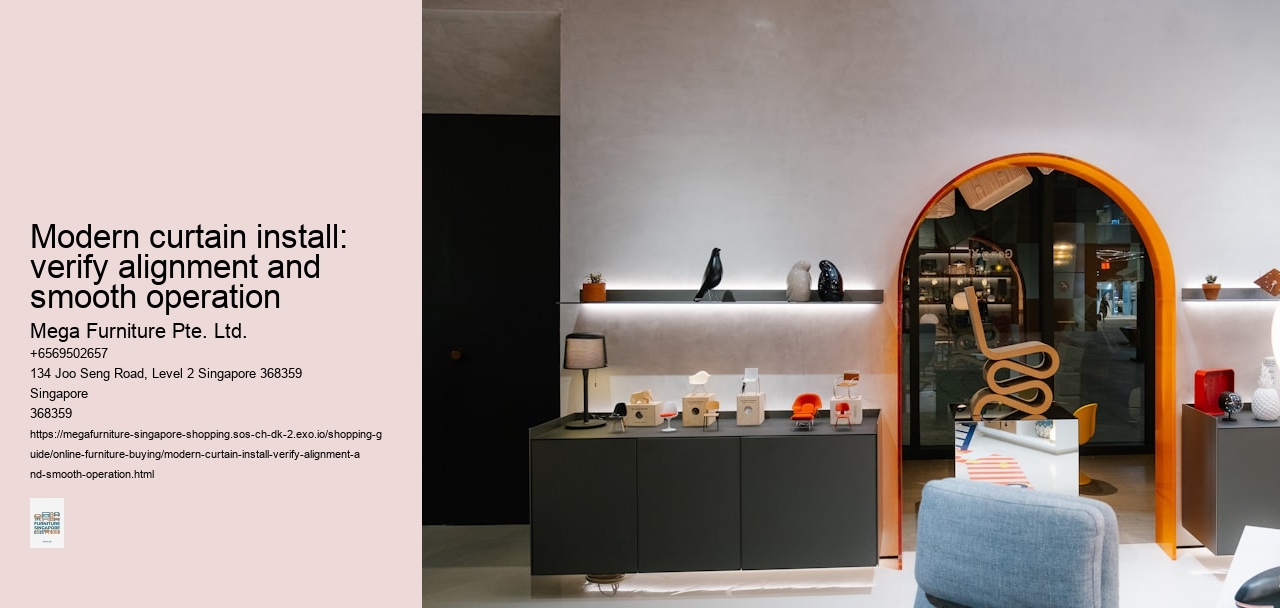
For homeowners furnishing new BTO flats, compatibility is key. Many modern living room setups feature mixed materials like metal and wood, and the wrong curtain system can clash with the clean lines of contemporary furniture. The showroom’s curated displays include tracks that integrate seamlessly with neutral palettes or bold accents, ensuring the final look stays uncluttered and cohesive.
Testing in person also reveals practical considerations. Motorised systems vary in noise levels, and what’s advertised as “whisper-quiet” might still be distracting in a quiet living room. The Tampines outlet lets you operate multiple systems side by side, so you can compare smoothness and speed — a feature that’s particularly useful for larger windows or sliding doors.
One standout advantage is the ability to visualise the system in a real-world setting. The showroom’s setups mimic common HDB layouts, from compact 12 sqm living rooms to open-concept condo spaces. This helps buyers gauge how the curtains will interact with their furniture and lighting, reducing the risk of buyer’s remorse.
Drilling into a pre-2015 HDB block often feels like navigating a minefield. You’ll start with the assumption it’s a straightforward two-hour job, only to hit reinforced concrete beams hidden within load-bearing walls — a common feature in BTO flats. Suddenly, what was meant to be a quick curtain installation stretches into a four-hour ordeal, complete with dust masks, ear protection, and the occasional muttered curse.
These reinforced beams aren’t just inconvenient; they’re a structural necessity. Older HDB blocks were built to withstand specific weight distributions, and drilling through these walls requires precision to avoid compromising the building’s integrity. Contractors typically use specialised equipment to identify beam locations, but even then, surprises are common. It’s not uncommon for homeowners to discover their carefully planned curtain rail alignment needs adjusting mid-install.
For those living in pre-2015 flats, patience is key. Expect delays, and budget for them — both in time and cost. Some contractors charge extra for reinforced beam drilling, citing the additional labour and equipment required. It’s a frustrating reality, but one that’s baked into the process of modernising older spaces. And while it’s tempting to rush through, cutting corners here can lead to misaligned curtains or worse, structural damage.
One thing’s certain: installation day rarely goes as planned. But dealing with reinforced beams is part of the trade-off for living in a neighbourhood like Tampines or Bedok, where older flats often come with mature greenery and established amenities. Just make sure your contractor knows what they’re getting into — and maybe keep a few extra coffees on hand.
The sheer curtain that looked so airy in the showroom becomes a solar cooker by 4pm in Bukit Panjang’s west-facing windows — homeowners quickly learn why blackout linings exist, but by then they’ve already sweated through three movie nights. Evening sun here hits harder than most anticipate, bleaching delicate fabrics within months while doing nothing to block the heat.
Fixed panel installations in Jurong Lake District’s narrow windows often block access to aircon units — a design flaw that only becomes obvious during servicing, when technicians need to remove entire curtain tracks just to reach the filters. Many owners end up hacking together DIY solutions involving magnets or Velcro, which defeats the purpose of paying for “custom” fittings.
Curved bay windows in newer BTOs tempt buyers into mismatched header styles — wave-fold curtains on one side, pinch pleats on the other — because nobody warned them that tracks need consistent mounting surfaces. The result looks like two different designers worked on the same window, with a visible gap where the mechanisms refuse to align.
Mid-century modern revival homes often pair light oak furniture with grey roller blinds, forgetting that 1960s aesthetics demand either full drama (floor-length velvet) or total minimalism (barely-there solar shades). The halfway approach just makes the room feel like an office.
Then there’s the classic budget mistake: spending $1,200 on motorised blinds for the living room, only to realise the bedrooms got stuck with $30 tension rods because funds ran out. Motorisation’s useless if you’re still wrestling with flimsy nylon every morning.
East-facing condos in Singapore get the full brunt of the morning sun — and that’s where UV damage exclusions in curtain warranties start to matter. Most motorised systems come with a standard two-year warranty, but the fine print often excludes fading or brittleness caused by prolonged UV exposure. For manual tracks, warranties typically stretch to five years, with fewer exclusions around sunlight damage.
The difference isn’t just about duration; it’s about coverage. Motorised systems, with their intricate mechanisms, are more prone to wear and tear — especially in homes where curtains are adjusted multiple times a day. Manual tracks, on the other hand, are simpler by design, which might explain why manufacturers are more generous with their warranties.
It’s worth considering how often you’ll be opening and closing your curtains. In many east-facing units, homeowners adjust blinds daily to manage heat and glare. Over time, that repetitive motion can strain motorised systems, leaving you with a repair bill just as the warranty expires. Manual tracks, while less convenient, might save you money in the long run.
Not all warranties are created equal, either. Some brands offer extended coverage for motorised systems, but these often come with additional costs. For east-facing condos, it’s worth weighing the convenience of automation against the durability of manual options. After all, replacing a motorised system halfway through its lifespan isn’t just inconvenient — it’s expensive.
The first thing you notice about BTO curtains is how they pool on the floor - standard 2.4m ceilings leave 30cm excess even with ready-made panels from IKEA or Spotlight. Condo floor-to-ceiling windows demand custom solutions; that extra metre of glass means blackout linings become non-negotiable for west-facing units where afternoon sun bakes entire living rooms into saunas.
Ground floor HDB dwellers layer up - sheer voile behind heavier drapes creates privacy without sacrificing daylight, while condo residents 15 storeys up might skip sheers entirely. Both battle the same Singaporean realities: humidity warps wooden battens within two seasons, and motorised blinds sound luxurious until you realise they need recalibrating every time the block's WiFi resets.
Budget reveals the real divide. A typical BTO living room's curtain setup (rails, two-layer drapes, basic installation) runs $800–$1,200 at neighbourhood shops like those in Tampines Street 11. Condo equivalents easily triple that - not just from fabric quantity, but because builders often recess tracks into concrete ceilings, turning what should be a simple swap into a demolition project.
Yet both share one unspoken rule: nobody actually opens their curtains fully. HDB layouts favour stacking panels to one side to avoid blocking precious storage space behind sofas; condo dwellers leave theirs permanently parted just enough to maintain the view but hide the drying racks. The real test comes during thunderstorms - that's when you discover whether your installer accounted for how wind tunnels between HDB blocks make fabrics billow like sails.
The first thing you notice about BTO curtains is how they pool on the floor — standard 2.4m ceilings leave 30cm excess even with ready-made panels from IKEA or Spotlight. Condo floor-to-ceiling windows demand custom solutions; that extra metre of glass means blackout linings become non-negotiable for west-facing units where afternoon sun bakes entire living rooms into saunas.
Ground floor HDB dwellers layer up — sheer voile behind heavier drapes creates privacy without sacrificing daylight, while condo residents 15 storeys up might skip sheers entirely. Both battle the same Singaporean realities: humidity warps wooden battens within two seasons, and motorised blinds sound luxurious until you realise they need recalibrating every time the block’s WiFi resets.
Budget reveals the real divide. A typical BTO living room’s curtain setup (rails, two-layer drapes, basic installation) runs $800–$1,200 at neighbourhood shops like those in Tampines Street 11. Condo equivalents easily triple that — not just from fabric quantity, but because builders often recess tracks into concrete ceilings, turning what should be a simple swap into a demolition project.
Yet both share one unspoken rule: nobody actually opens their curtains fully. HDB layouts favour stacking panels to one side to avoid blocking precious storage space behind sofas; condo dwellers leave theirs permanently parted just enough to maintain the view but hide the drying racks. The real test comes during thunderstorms — that’s when you discover whether your installer accounted for how wind tunnels between HDB blocks make fabrics billow like sails.