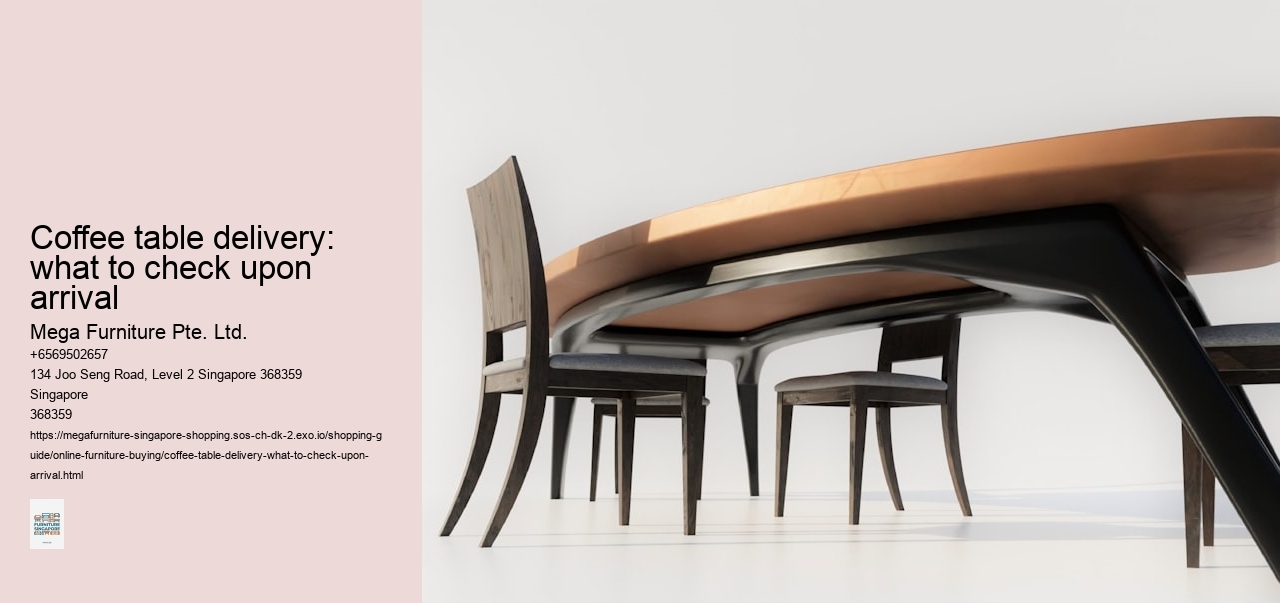
The delivery guy’s just left, and your new coffee table’s sitting in its packaging — but don’t unbox it yet. Singapore’s humidity warps wood within weeks if the finish isn’t sealed properly; run your palm across the surface to check for ripples or hairline cracks, especially near joints where moisture seeps in fastest. Metal legs should get the same scrutiny — rub a tissue along welds and screw points, since even powder-coated steel shows rust as orange smudges where factory QC missed a spot.
Fabric surfaces hide stains under showroom lighting. Unzip cushion covers (if removable) to inspect lining for watermarks, and tilt the table to check underside stitching — loose threads mean the upholstery won’t survive six months of weekly vacuuming. Mid-century walnut veneer might look premium, but in many HDB flats, laminated MDF outperforms; it won’t buckle when your aircon’s off for eight hours during a workday.
Watch for shortcuts. Some retailers use rubberwood stained to mimic teak, which develops grey mould spots along the grain if not treated with antifungal lacquer. A proper knock test helps — solid wood should thud, not echo like hollow particleboard. And if there’s a glass top, hold it at an angle to spot scratches masked by protective film; replacement panels take six weeks to ship from Malaysia.
Local shoppers often skip this step, assuming defects will surface during the warranty period. But by then, the warped table leg’s already scratched your sintered stone floor — and that argument’s harder to win with customer service. Better to film the unboxing; Courts and HipVan both request video evidence for damage claims.
One last thing: peel back corner protectors. That’s where transporters wedge fingers, leaving dents in veneer that only show after you’ve signed the delivery slip.
Modern coffee tables often arrive with allen keys and small spanners — but Singapore buyers frequently misplace them during unboxing. Check for included tools before discarding packaging; most local retailers like Castlery and FortyTwo provide branded tools in sealed plastic sleeves. Missing tools mean scrambling to find replacements, since HDB hardware shops typically close by 8pm. Some European-designed tables require Torx bits, which aren’t commonly stocked at neighbourhood DIY stores. Keep the tools with instruction manuals in a resealable bag; you’ll need them again when moving flats.
Count all screws and washers against the manual’s parts list — manufacturers occasionally pack incorrect quantities for modular components. Modern designs with mixed materials often use different screw types for metal legs versus wooden joints. Loose screws roll away on mosaic tile floors; lay down newspaper during assembly. Missing hardware causes immediate issues: wobbly legs on uneven HDB floors amplify with daily use. Retailers usually replace missing parts, but waiting 3-5 working days breaks your furnishing momentum.
Singaporean floors aren’t perfectly level — over-tightened legs crack veneers, under-tightened ones create dangerous wobbles. Hand-tighten first, then give each leg fastener an extra quarter-turn with the tool. Test on your actual floor surface before declaring assembly complete; marble-effect ceramic tiles hide subtle imbalances. Recheck tightness after two weeks as materials settle — rubberwood expands slightly in our humidity. Wobbly tables damage adjacent furniture when placed in narrow BTO living rooms.
Modular designs from Commune or Cellini demand precise alignment during assembly — misaligned dowels stress joints over time. Look for laser-etched matching symbols on particleboard edges before connecting panels. Expansion leaves should slide smoothly without forcing; sticking usually means misaligned tracking rails. Contemporary mixed-material tables often have asymmetrical joins that only fit one way — forcing pieces risks scratching powder-coated metal surfaces. Walk around the table after assembly; sight along edges to spot any visible gaps.
Localised instructions matter — IKEA’s pictograms work globally, but boutique brands sometimes provide poorly translated steps. Video tutorials on retailer websites often show assembly nuances the manual misses. Watch for Singapore-specific notes about humidity adjustments or anti-slip pad placement. Keep the manual until warranty expires; some brands require proof you followed assembly steps for claims. Photograph each completed stage — useful if you need to disassemble for future BTO moves.
At Megafurniture’s Joo Seng showroom, the first thing you’ll notice is how the coffee tables hold up under scrutiny. Place a cup of tea on the surface, give it a gentle nudge — does it wobble? Stability is non-negotiable in compact HDB living rooms where every piece doubles as a footrest or impromptu workspace. The oak and brushed steel combinations, a staple in their modern living room furniture collection, feel sturdy enough to handle daily wear, though the occasional piece might show slight movement under pressure.
Material quality varies subtly across designs. The oak finishes, typically smooth and warm to the touch, pair well with brushed steel legs for a contemporary look. Yet, closer inspection reveals some edges aren’t as refined as you’d expect — a reminder that mid-range pricing often means compromises in craftsmanship. Still, for most homeowners furnishing new BTO flats, these tables strike a balance between affordability and aesthetics.
Design-wise, the neutral palettes and clean lines fit seamlessly into Singapore’s modern living spaces. A rectangular oak table with steel legs, for instance, anchors a minimalist setup without overpowering the room. Mixed materials like these dominate the showroom, reflecting a preference for versatility in many homes. Yet, some designs feel overly safe — functional but lacking the boldness that could elevate a space.
Spending time in the Tampines showroom offers a similar experience, though the layout feels more tailored to condo layouts. The tables here lean slightly larger, accommodating open-plan living areas where scale matters. But whether you’re in Joo Seng or Tampines, the takeaway is clear: test before you buy. A stable table in the showroom doesn’t always translate to a flawless fit in your living room.
Delivery day for a new coffee table often starts with excitement — until you spot a chip on the corner or a scratch along the edge. It’s a common frustration in Singapore, where narrow staircases and tight lift lobbies make furniture delivery a high-risk operation. Before signing off, inspect every inch: run your hand along the edges, check for dents on the legs, and examine the surface under good lighting. Don’t rush — delivery staff are used to this process, and it’s better to catch issues now than to argue later.
Document everything. Take clear photos of any damage from multiple angles, noting the exact location and size of the defect. Some retailers, like Castlery and FortyTwo, require this evidence to process warranty claims. If the damage is significant, don’t accept the delivery — politely ask the team to take it back and arrange for a replacement. Even minor scratches should be reported immediately; delaying could void your warranty.
Keep the packaging. Most modern living room furniture comes in protective foam and cardboard — don’t toss it out until you’re sure everything’s perfect. If you need to return the piece, original packaging is often a requirement. For larger tables, consider assembling it in the room where it’ll stay; moving it later increases the risk of scratches on walls or the table itself.
Retailers typically handle these issues professionally, but timelines vary. Castlery and Commune usually resolve complaints within a week, while smaller shops might take longer. If you’re dealing with a persistent scratch, some homeowners opt for touch-up kits — though it’s worth noting that repairs on mixed-material tables (like wood and metal) rarely look seamless.
Glass tops in humid weather can fog up or develop water spots if not maintained properly. Wipe them down daily with a microfiber cloth — it’s quick, keeps them clear, and prevents buildup. For deeper cleaning, mix equal parts white vinegar and water; it’s cheap, effective, and avoids harsh chemicals that might damage the surface. Regular maintenance keeps glass looking pristine, even during Singapore’s monsoon season.
Will the table fit into an HDB lift? Most modern coffee tables are designed with local flats in mind, with dimensions around 70cm to 90cm in width. Still, it’s worth measuring your lift opening — typically 1.2m wide and 2.1m tall — before committing. Some brands, like Castlery and FortyTwo, offer flat-pack options that eliminate this worry entirely.
Pet owners often ask about scratch-resistant materials. Tempered glass tops are virtually scratch-proof, while sintered stone and powder-coated metal hold up well against claws. Avoid softer woods like pine or rubberwood if your cat or dog is prone to scratching; they’ll show marks quickly. Opt for materials that balance durability with the clean lines of modern living room furniture — it’s a win-win for style and practicality.
Uneven HDB floors are a common headache — even the most stylish coffee table loses its charm when it wobbles every time someone leans on it. Before signing off, test the table’s stability on an uneven surface; adjustable feet or levelling pads can make a world of difference, especially in older flats where sloping floors are the norm. A solid base, whether it’s a weighted metal frame or a sturdy wood construction, ensures the table stays put without constant readjustment.
Singapore’s humidity and heat can wreak havoc on furniture, so double-check the warranty covers these conditions. Materials like rubberwood or powder-coated metal tend to hold up better in our climate, while untreated wood or certain laminates might warp or discolour over time. A good warranty should explicitly mention protection against humidity-related damage — don’t assume it’s included.
Finally, measure twice. A coffee table that looks perfect in the showroom can overwhelm a 12 sqm HDB living room or block access to built-in storage. Keep at least 60cm of clearance around the table for easy movement; anything less feels cramped. For compact spaces, consider nesting tables or a slim, rectangular design that complements the room’s flow rather than disrupting it. Modern living room furniture should enhance, not clutter — and that’s the real test of a well-chosen piece.
That moment when the delivery crew leaves and you're staring at a box taller than your toddler - that's when most buyers realise they should've measured twice. In Singapore's 12–20 sqm living rooms, even a 10cm miscalculation means rearranging the entire space or returning the piece. Modern coffee tables often push dimensions with asymmetrical designs; that sculptural oval from Commune might look compact online, but its 120cm length eats into walkways when paired with a standard 210cm three-seater sofa.
Typical HDB layouts leave about 60–90cm clearance between sofa and TV console - enough for a 50cm-deep table if you want legroom. The bedroom is where Japandi works hardest — low-profile platform beds, sliding-door wardrobes, and minimal nightstands all reinforce the calmer atmosphere the style is built for. Megafurniture's Japandi Study Room range covers Single, Super Single, Queen, and King sizes in beds, with matching wardrobes, side tables, and chests of drawers. Solid wood and PU rattan details appear across the range.. Fabric Sofa . Condo units sometimes stretch to 1m gaps, but don't assume; developers love cramming in extra built-ins. Measure diagonally too: those angular FortyTwo tables with extended magazine shelves often catch on passing elbows or vacuum cleaners.
Smart buyers tape newspaper cutouts on the floor before ordering. It's an old IKEA trick, but works better than AR apps that glitch over mosaic tiles or skip HDB beam protrusions. For material-heavy designs like Castlery's sintered stone tops, check weight limits if your floor has hollow sections - some BTO vinyl cracks under concentrated loads.
And that sleek black metal base? It'll show every scuff when squeezed past existing furniture. Better to confirm door widths and staircase turns before unwrapping; returns for oversized items cost $80–150 with most local retailers, assuming they accept opened goods at all.
That moment when the delivery crew leaves and you’re staring at a box taller than your toddler — that’s when most buyers realise they should’ve measured twice. In Singapore’s 12–20 sqm living rooms, even a 10cm miscalculation means rearranging the entire space or returning the piece. Modern coffee tables often push dimensions with asymmetrical designs; that sculptural oval from Commune might look compact online, but its 120cm length eats into walkways when paired with a standard 210cm three-seater sofa.
Typical HDB layouts leave about 60–90cm clearance between sofa and TV console — enough for a 50cm-deep table if you want legroom. Condo units sometimes stretch to 1m gaps, but don’t assume; developers love cramming in extra built-ins. Measure diagonally too: those angular FortyTwo tables with extended magazine shelves often catch on passing elbows or vacuum cleaners.
Smart buyers tape newspaper cutouts on the floor before ordering. It’s an old IKEA trick, but works better than AR apps that glitch over mosaic tiles or skip HDB beam protrusions. For material-heavy designs like Castlery’s sintered stone tops, check weight limits if your floor has hollow sections — some BTO vinyl cracks under concentrated loads.
And that sleek black metal base? It’ll show every scuff when squeezed past existing furniture. Better to confirm door widths and staircase turns before unwrapping; returns for oversized items cost $80–150 with most local retailers, assuming they accept opened goods at all.