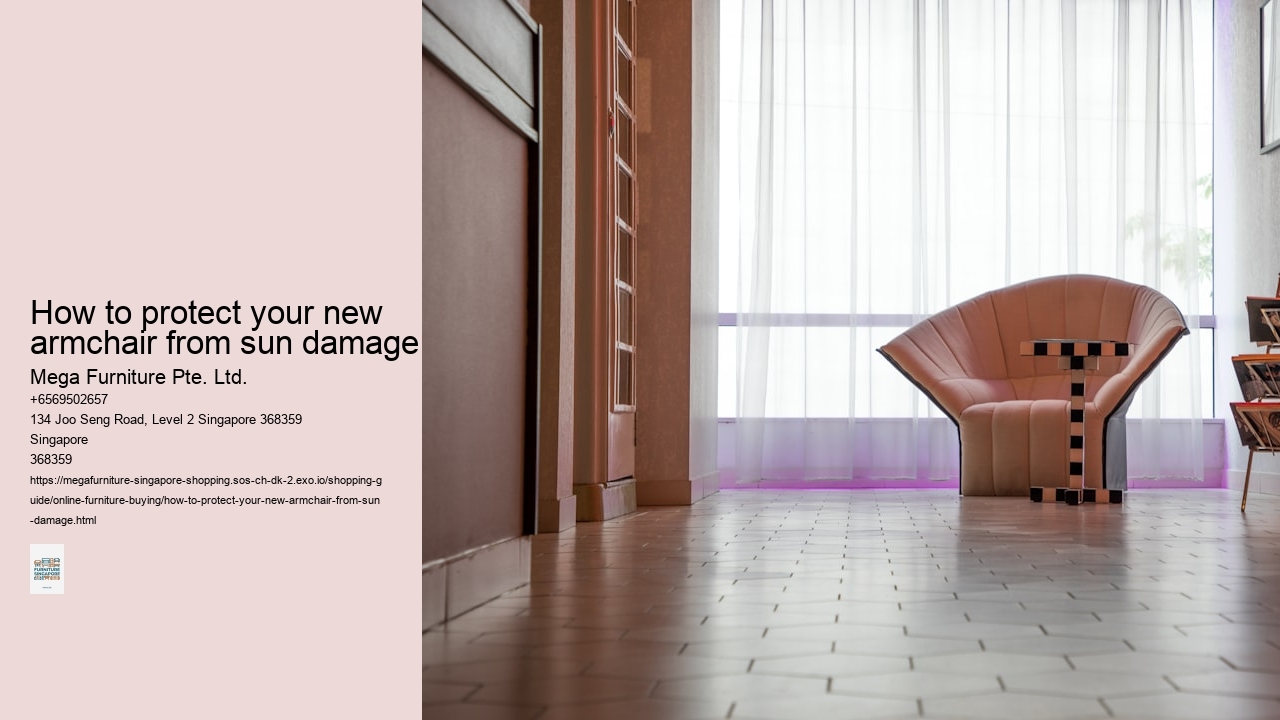
In Singapore’s humidity, cotton upholstery starts to fade and sag within months — a common frustration for buyers who prioritise aesthetics over practicality. Solution-dyed acrylics, on the other hand, resist moisture and maintain their colour even in high humidity, making them a smarter choice for tropical climates. Look for fabrics with a rub count of 50,000 or higher; these withstand daily wear better, especially in homes with kids or pets.
UV resistance is another critical factor, given the relentless sun in HDB corridors or condos with floor-to-ceiling windows. Synthetic fibres treated for UV protection, like those tested in Johor Bahru climate chambers, outperform natural materials that degrade under prolonged exposure. Performance fabrics in neutral tones or subtle patterns often hide stains and fading better than bold colours, which can look dated quickly.
Some collections, like Megafurniture’s SunArmor range, focus specifically on these durability features — a practical approach for buyers who want modern living room furniture that lasts. While synthetic fabrics might lack the tactile appeal of linen or velvet, they’re easier to maintain in a climate where mould and mildew are constant threats. For armchairs placed near windows or balconies, prioritising durability over texture isn’t just practical; it’s essential.
Sim Lim Tower retailers offer budget-friendly window films that block 99% of UV rays. These films are a practical solution for protecting modern armchairs from sun damage without compromising natural light. Installation typically takes less than an hour, and the films blend seamlessly with contemporary living room aesthetics. For HDB flats and condos, they’re a cost-effective alternative to pricier treatments. Maintenance is minimal—just wipe clean with a microfiber cloth.
Motorised blinds with heat sensors are a premium option, especially for landed property sunrooms. They automatically adjust based on sunlight intensity, protecting furniture and maintaining comfort. These blinds integrate well with smart home systems, allowing control via apps or voice commands. While the initial investment is higher, they’re energy-efficient and durable. For homeowners prioritising convenience and modernity, they’re a standout choice.
Selecting UV-resistant fabrics for armchairs adds an extra layer of protection. Performance fabrics like Sunbrella are designed to resist fading and wear from prolonged sun exposure. They’re available in neutral tones and bold accents, aligning with modern living room palettes. This option works well alongside window treatments, ensuring furniture longevity. It’s a practical yet stylish solution for sun-prone spaces.
Strategic placement of armchairs can minimise sun damage without heavy reliance on treatments. Position them away from direct sunlight, especially in west-facing rooms. Use rugs and curtains to diffuse light and reduce UV exposure. In smaller spaces like BTO flats, rearranging furniture seasonally can help. This approach complements window treatments, enhancing overall protection.
Regular maintenance extends the life of both window treatments and armchairs. Clean window films monthly to prevent dust buildup that can reduce effectiveness. Rotate armchair cushions periodically to ensure even wear. Inspect motorised blinds for technical issues and lubricate tracks annually. These small steps keep your living room looking fresh and functional.
BTO buyers often assume light-coloured fabrics hide fading better—until their cream linen armchair starts yellowing unevenly after six months facing Punggol’s floor-to-ceiling windows. The irony? Darker greys and navies actually camouflage sun damage better in Singapore’s harsh UV, especially on performance fabrics like Sunbrella® or Crypton®. Yet showroom lighting tricks persist: those pristine white swatches under cool LEDs rarely resemble how your unit’s afternoon glare will reveal every shadow of wear.
New Punggol BTO layouts tempt buyers to float armchairs within 1.5m of full-height windows—great for Instagram shots, terrible for longevity. Condo dwellers might get away with it thanks to tinted glass, but HDB’s standard clear panes accelerate fading faster than expected. One homeowner reported her olive green velvet chair fading patchy khaki on the window side within a year, while the shaded half stayed mint.
The real miscalculation is assuming "UV-resistant" claims equal Singapore-proof. Most imported labels test for European or Japanese sunlight—our equatorial rays degrade fabrics 30% faster. Local retailers like FortyTwo now specify "tropical-grade" treatments, but buyers still default to IKEA’s untested linen blends because "the colour matches the moodboard".
Storage beds beat divan beds in most HDB flats, simply because nobody has anywhere else to put their luggage.
Megafurniture’s showrooms demonstrate this perfectly—their Joo Seng location stages armchairs at safe 2m distances from mock windows, while the Tampines branch lets you test swatches under full-spectrum lamps. Smart buyers bring fabric samples home to observe how their unit’s light shifts from 3pm golden hour to 7pm artificial glow. That taupe bouclé you loved under showroom spotlights? It’ll read hospital-beige by your Philips Hue bulbs.
The Joo Seng showroom keeps two identical armchairs by the window — one faded to a sickly beige after six months of direct sun, the other still holding its charcoal upholstery colour. That’s the difference tropical testing makes; most imported furniture never faces Singapore’s UV levels during development, leaving buyers with sun-bleached cushions by year two. Warranties here typically cover manufacturing defects, not environmental damage — which makes Megafurniture’s sun-fade coverage rare. Their test racks face west at Tampines, baking samples in the afternoon heat that cracks cheaper rubberwood legs and bleaches synthetic fabrics. Humidity-resistant joinery matters just as much; swollen joints from our 80% RH air can wobble a chair’s structure long before the fabric fades. Modern living room pieces suffer most. Their clean lines rely on tight seams that pop under moisture, and neutral palettes show fading faster than busy patterns. A taupe performance velvet armchair might look sophisticated in a BTO showflat, but without proper treatment, it’ll turn patchy by the first National Day fireworks. The fade comparisons aren’t just marketing — they’re proof that tropical testing isn’t the same as slapping “weather-resistant” on a spec sheet. Local shoppers leaning toward
imported mid-century replicasshould check if the manufacturer ever tested them beyond a European summer’s mild 25°C.
In Singapore’s humidity, fabric armchairs in modern living rooms often gather moisture in places you don’t notice — until mould starts creeping into the cushion crevices. Monthly vacuuming with a fabric attachment isn’t just about keeping dust at bay; it’s about pulling out the tiny particles that trap moisture and create a breeding ground for spores. For chairs with removable covers, washing them every two months helps, but skip the fabric softener — it leaves a residue that attracts dampness.
During monsoon season, even well-ventilated flats can feel like saunas. Placing dehumidifier pads under chair legs is a simple hack to keep moisture from seeping into wood or metal bases. If you’re using a standalone dehumidifier, position it near the chair rather than across the room — humidity tends to pool in corners where airflow is weakest. For leather armchairs, avoid conditioners with oily or waxy bases; they might look glossy at first, but they’ll attract moisture faster than you’d expect.
Performance fabrics like Crypton or Sunbrella are popular choices for modern living room furniture, and for good reason — they resist stains and dry quickly. But even these materials need attention in high humidity. A quick wipe-down with a microfiber cloth after vacuuming can prevent moisture from settling into the weave. If you’re dealing with a particularly damp neighbourhood — think Eunos or Bedok — consider rotating your chairs slightly every week to ensure even airflow around all sides.
Singaporean shoppers eyeing modern armchairs often fixate on three sun-related worries — and they’re usually right to. Black fabric fades fastest, but there’s a silver lining: it goes evenly, unlike patterned upholstery that ends up patchy like a poorly maintained void deck bench.
Can you slap car window tint film on your HDB living room windows? Technically yes, but you’ll risk fines — the Housing Board’s rules explicitly ban reflective films that alter the building’s facade. Most homeowners don’t realise this until the town council sends a notice; better to invest in UV-blocking sheer curtains from IKEA or Spotlight instead.
Rotating cushions matters more than people think. Near east-facing windows where Singapore’s morning sun hits hardest, flip them every fortnight unless you want one side bleached bone-white. West-facing units can stretch to three weeks, but only if you’re diligent about closing blinds by 3pm — and let’s be honest, half of us forget until the leather starts cracking.
The real tragedy is watching a $1,800 linen armchair from Castlery fade within a year because someone assumed “north-facing” meant safe. Our equatorial UV index hovers around 12 even on cloudy days; that’s enough to wreck most performance fabrics by the 18-month mark.
Oddly enough, the shoppers who fret least about sun damage tend to own the oldest-looking furniture — their solution? Just embrace the fade. A sun-bleached grey velvet armchair in a Tiong Bahru pre-war flat often looks intentionally vintage rather than neglected.
That 3.5m gap between your BTO’s living room window and armchair spot looks generous on paper — until you account for afternoon glare bleaching one armrest by year two. Most homeowners realise too late their floor plan’s sunlight angles differ from showroom lighting; measure twice with a tape, marking where shadows hit at 3pm in your actual unit.
Fabric swatches lie. What looks grey-beige under showroom spotlights often reveals orange undertones when held under a phone torch — test samples against both natural and artificial light, rubbing them to check for uneven fading. Performance velvet handles east-facing windows better than linen blends, though the trade-off is that synthetic feel some buyers dislike.
Bring your room’s dimensions scribbled on paper, not just in your phone gallery; consultants need to see the 2.8m wall where your new armchair will live beside an existing sofa. They’ll flag clearance issues most buyers miss — like whether a swivel base actually fits your narrow walkway, or if that sculptural backrest blocks the aircon vent.
Showrooms rarely display how armchairs age. Ask to see floor models from last season’s collection; check for sagging seat cushions or armrests darkened by hand oils. The difference between a $899 and $1,600 chair often shows in year three, when cheap foam collapses into pancake thickness.
Singapore’s humidity warps wooden legs faster than manufacturers admit. Run a finger along the seams of display unit joints — if there’s even slight wobble now, imagine it after eighteen months of tropical weather. Solid rubberwood bases outlast veneered MDF, though they’ll cost you another $300–$500.
In a typical 12 sqm HDB living room, UV exposure can fade fabrics three times faster than in temperate climates - a fact many homeowners discover only after their armchair's once-vibrant upholstery starts looking washed out. West-facing condo windows amplify the issue; even with curtains, the relentless afternoon sun bleaches performance velvet and fades neutral palettes faster than expected. It's not just about aesthetics - prolonged exposure weakens fibres, leaving modern living room furniture looking tired well before its time.
Singapore's equatorial sun doesn't discriminate. Mid-century modern armchairs with bouclé or linen upholstery are particularly vulnerable, as lighter fabrics show fading more visibly. Darker tones like charcoal or navy aren't immune either; they often develop uneven patches where sunlight hits hardest. For west-facing units, the problem peaks between 3pm and 6pm, when UV rays penetrate even the thickest curtains - a common oversight in many new condo setups.
Homeowners often assume curtains or blinds are enough, but that's rarely the case. Sheer curtains diffuse light without blocking UV rays, while blackout options can make compact spaces feel oppressive. Some opt for UV-filtering window films, though these require professional installation and can add $200 to $400 to the budget. Others shift furniture layouts seasonally, rotating armchairs away from direct sunlight - a temporary fix that only delays the inevitable.
The irony is that modern living room furniture, with its clean lines and mixed materials, is designed to last decades. Yet in Singapore's climate, fabric-heavy pieces often show wear within three to five years. Performance fabrics like Crypton or Sunbrella offer some resistance, but even they can't fully withstand the daily barrage of UV rays in west-facing homes. It's a trade-off many don't anticipate when selecting that perfect armchair for their BTO or condo.
In a typical 12 sqm HDB living room, UV exposure can fade fabrics three times faster than in temperate climates — a fact many homeowners discover only after their armchair’s once-vibrant upholstery starts looking washed out. West-facing condo windows amplify the issue; even with curtains, the relentless afternoon sun bleaches performance velvet and fades neutral palettes faster than expected. It’s not just about aesthetics — prolonged exposure weakens fibres, leaving modern living room furniture looking tired well before its time.
Singapore’s equatorial sun doesn’t discriminate. Mid-century modern armchairs with bouclé or linen upholstery are particularly vulnerable, as lighter fabrics show fading more visibly. Darker tones like charcoal or navy aren’t immune either; they often develop uneven patches where sunlight hits hardest. For west-facing units, the problem peaks between 3pm and 6pm, when UV rays penetrate even the thickest curtains — a common oversight in many new condo setups.
Homeowners often assume curtains or blinds are enough, but that’s rarely the case. Sheer curtains diffuse light without blocking UV rays, while blackout options can make compact spaces feel oppressive. Some opt for UV-filtering window films, though these require professional installation and can add $200 to $400 to the budget. Others shift furniture layouts seasonally, rotating armchairs away from direct sunlight — a temporary fix that only delays the inevitable.
The irony is that modern living room furniture, with its clean lines and mixed materials, is designed to last decades. Yet in Singapore’s climate, fabric-heavy pieces often show wear within three to five years. Performance fabrics like Crypton or Sunbrella offer some resistance, but even they can’t fully withstand the daily barrage of UV rays in west-facing homes. It’s a trade-off many don’t anticipate when selecting that perfect armchair for their BTO or condo.