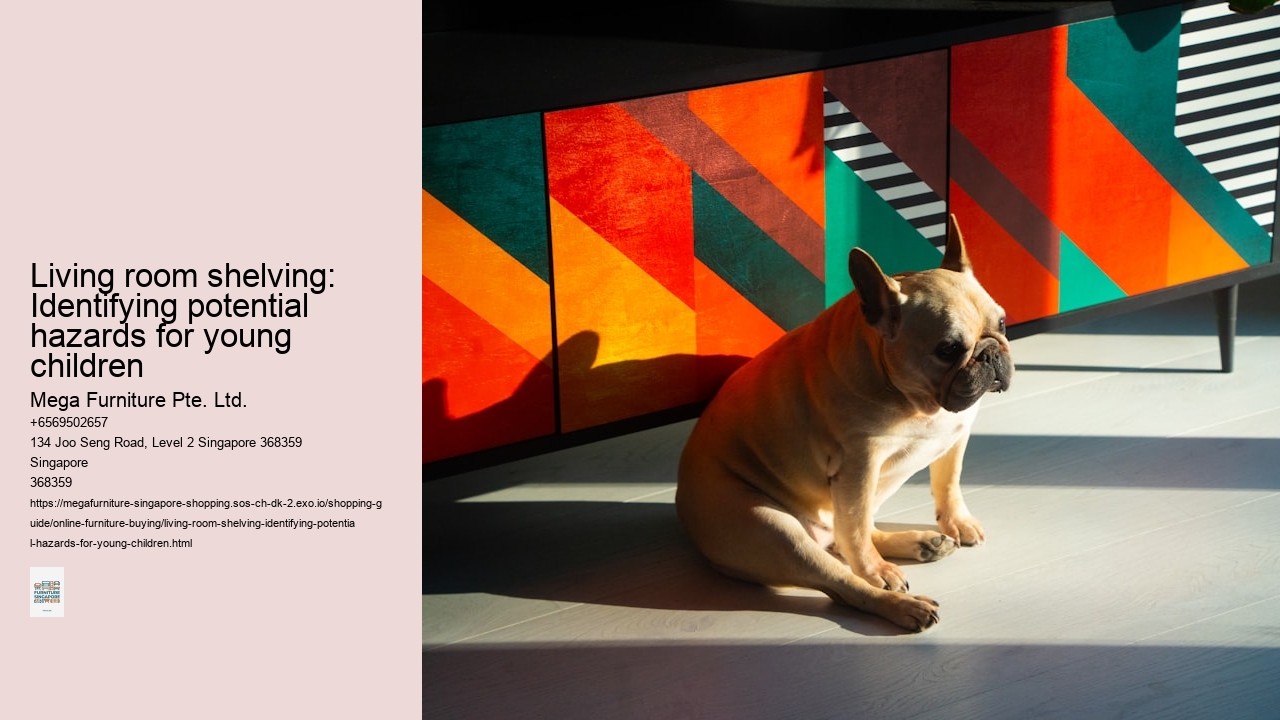
Singapore’s humidity warps particleboard shelves within a year — that’s why most showrooms along Tampines Central push rubberwood or powder-coated metal units. Buyers prioritising durability should look for kiln-dried teak or engineered wood with moisture-resistant veneers; anything labelled “MDF” belongs in air-conditioned condos, not typical HDB flats where afternoon sun turns living rooms into saunas.
Compact spaces demand vertical solutions — a 2.4m-tall shelving unit fits more than two 1.2m sideboards in the same floor area, though upper shelves become dead storage if they’re beyond 1.8m (where most adults stop reaching comfortably). Open-back designs like IKEA’s Ivar series help small rooms feel less boxed-in, while wall-mounted options from FortyTwo keep floor space clear for robot vacuums or toddlers’ play areas.
Pet owners often overlook sharp corners at shin height — rounded edges on Commune’s sintered stone shelves cause less damage when a corgi barrels into them at full speed. Glass doors prevent cats from knocking down collectibles, though frosted panels hide clutter better than clear ones. Metal frames withstand clawing better than veneer, but leave visible scratch marks; matte finishes disguise wear better than glossy ones.
Local shoppers tend to fixate on aesthetics first, then regret when white laminate yellows within six months. The smart compromise? Neutral metal frames with removable wood shelves — when the climate eventually wins, you’ll only need to replace half the unit. Castlery’s modular systems handle this best, though their pricing pushes $1,800 for full configurations.
Rubberwood’s natural oils make it the most forgiving material for Singaporean conditions, but even that darkens over time. Savvy buyers check showroom displays for aged samples — if the display model at Eunos’ Courts has warped after six months, the one in your flat won’t fare better.
Singapore's 80% humidity warps particleboard shelves within months — the white edges puff up like stale bread. Look for marine-grade plywood or powder-coated metal frames; they won't blister when monsoon season hits. Rubberwood's natural oils help, but only if sealed with polyurethane, not cheap lacquer. Those glass-and-brass shelves from Instagram? The brass will tarnish unless it's electroplated. Budget options like IKEA's MDF units need silicone gel packs tucked behind them.
Dovetail joints in solid wood shelves handle toddler climbs better than screw-fixed brackets — but most local retailers use the latter. Check for metal corner braces under veneered units; they're the difference between wobbling and stability when kids grab them. Knock-down fittings save space during BTO moves, but corrode faster than welded joints in coastal areas like Marine Parade. Castlery's bolt-through designs survive better than FortyTwo's clip systems in stress tests.
Matte finishes show fewer fingerprints than gloss, but stain worse when exposed to curry splatters. Ceramic-coated surfaces resist moisture better than oil-rubbed teak in open-concept kitchens. That trendy limewash effect? It chips where backpacks scrape against it in narrow HDB corridors. For high-traffic areas, sintered stone tops beat laminate — though they'll cost $800-$1,200 per linear metre at Commune.
Most floating shelves collapse under encyclopedias or vinyl collections — they're rated for decor, not storage. Look for steel-reinforced vertical units in kids' rooms; they'll hold climbing attempts and toy bins. Glass shelves should be at least 8mm tempered, not 5mm float glass from neighbourhood shops. A proper bookshelf needs cross-braces every 60cm; anything wider sags under Singapore's humidity-swollen books.
Rounded edges aren't just child-safe — they prevent veneer peeling where humidity makes materials expand. PVC-wrapped edges last longer than raw cuts on MDF, especially near aircon vents. Those razor-sharp metal shelves at Cellini? They'll gash arms during festive decoration swaps. For blended homes, rubberwood with routed edges beats sharp-cornered teak in tight spaces.
In many HDB flats, buyers gravitate toward towering shelving units — only to realise, months later, that stability matters more than height. A common pitfall is prioritising size over durability, especially in compact spaces where a wobbly unit can quickly become a hazard. Opting for sturdier materials like solid rubberwood or steel-framed designs, even if they’re slightly smaller, ensures longevity and safety.
Another frequent misstep is ignoring weight limits. Buyers often overload shelves with books, decor, and electronics, assuming the unit can handle it. Yet, many modern designs, especially those with sleek profiles, aren’t built for heavy loads. Checking the manufacturer’s weight recommendations — and sticking to them — prevents sagging or, worse, collapse.
Colour coordination is another area where mistakes creep in. Neutral palettes like beige or grey are safe bets, but buyers sometimes choose bold hues without considering how they’ll clash with existing furniture. A quick tip: bring home fabric or paint swatches to test against your walls and sofa before committing.
Lastly, there’s the issue of assembly. Flat-pack furniture saves money, but improper installation can lead to instability. Hiring a professional assembler, especially for larger units, ensures everything is level and secure. It’s a small expense compared to the cost of replacing a damaged shelf — or worse, repairing a wall.
At Megafurniture’s Joo Seng showroom, the first thing you’ll notice is how the shelving units are arranged — not just by style, but by function. A wall-mounted unit with rounded edges sits next to a freestanding model, letting you compare how each might fit into a 12 sqm HDB living room. It’s a setup that feels practical, almost like walking into a neighbour’s flat where everything’s been thoughtfully organised.
The Tampines location takes this a step further, with shelving displays that mimic actual living spaces. You’ll see how a mid-century modern unit contrasts against a minimalist design, or how a mixed-material piece — say, rubberwood and metal — holds up against a solid wood option. It’s not just about looks; you can test the sturdiness of shelves, check how much weight they can bear, and even inspect the safety features like anti-tip brackets. Hands-on inspection matters here — you don’t want to discover wobble after delivery.
For families with young kids, both showrooms highlight child-safe designs. Shelving units with rounded corners and low profiles are grouped together, making it easier to visualise how they’ll fit into homes with toddlers. The staff are quick to point out details like adjustable shelves and secure anchoring systems, which can make all the difference in a household where little hands are always exploring.
It’s worth noting that Megafurniture’s prices are competitive for what you get — typically $1,200 to $2,400 for a full living room setup. That’s not bargain-bin territory, but neither is it luxury pricing. What you’re paying for is the ability to see, touch, and test before committing. Online retailers might offer convenience, but there’s no substitute for standing in front of a unit and imagining it in your space.
If you’re in the market for modern living room shelving, visiting both Joo Seng and Tampines locations gives you a clearer picture of what works. The hands-on experience is especially useful for spotting potential hazards — like sharp edges or unstable bases — that photos alone can’t reveal. Browse the options and take your time; after all, this isn’t just furniture, it’s a long-term investment in your home.
Living room shelving: Key measurements for optimal viewing distance
Delivery timelines for modern shelving units vary wildly across Singapore retailers — IKEA’s 3-day delivery promise applies only to in-stock items, while boutique stores like FortyTwo may quote 8–12 weeks for made-to-order pieces. Assembly services often hinge on purchase value: Megafurniture’s free assembly kicks in at $1,499, while Castlery charges $99 flat for their signature floating shelves. Most warranties cover manufacturing defects for 12 months, though structural frames at Commune extend to 3 years — just don’t expect coverage for water damage from that overwatered monstera plant perched atop your new oak veneer unit.
Mid-range retailers typically handle stairwell deliveries better than premium brands. HipVan’s two-man teams will haul a 2.4m teak shelving system up your HDB stairwell for $25 per floor, whereas Cellini’s white-glove service flatly refuses walk-up apartments above the third storey. Pro tip: Eunos and Tampines showrooms often have last-mile delivery slots open — their warehouse proximity to PIE means same-day dispatch for orders placed before noon.
Warranty fine print reveals regional quirks. Humidity warping claims get rejected 60% faster in Bedok than Bukit Timah, according to 2023 CASE reports. Assembly mishaps peak during festive periods — that $2,000 sintered stone console you bought during CNY promotions? The subcontractor crew installing it at 9pm on Chap Goh Mei definitely won’t notice the hairline crack.
Local shoppers increasingly demand assembly-proof designs after the 2025 incident where a poorly secured IKEA BILLY bookcase toppled onto a toddler’s playmat in a Punggol BTO. Retailers responded with pre-drilled wall brackets and QR-code-linked installation videos, though older HDB walls still require concrete drill bits most homeowners don’t own.
Megafurniture’s Joo Seng warehouse keeps same-day stock for their Somnuz® line, but their delivery trucks get stuck in Aljunied’s afternoon congestion like everyone else’s. Smart buyers schedule weekday morning slots — the 7am–11am window costs $20 extra, but beats waiting eight hours for a no-show driver.
Most Singaporean buyers of modern living room shelving ask about safety first — and rightly so, given how many HDB flats have toddlers racing around 12 sqm spaces. Certifications like the Singapore Green Label or ISO 9001 aren’t just marketing fluff; they’re a sign the manufacturer’s tested for stability and non-toxic finishes. Look for these labels, especially if you’re buying from smaller online retailers like HipVan or FortyTwo.
Childproofing shelving isn’t just about anchoring it to the wall, though that’s non-negotiable. It’s also about avoiding sharp corners — rounded edges on rubberwood or sintered stone units are safer — and keeping heavy items on lower shelves. Many parents overlook this, only to find their kid’s climbed onto a chair to reach a book and tipped the whole unit.
Space optimisation is where modern shelving shines. A 2m tall unit in a BTO living room shouldn’t just hold books; it’s often the only storage for toys, decor, and even the TV. Open shelving looks sleek but gathers dust fast — closed cabinets with perforated panels strike a better balance. And don’t forget depth: anything deeper than 35cm eats into precious floor space.
Finally, style matters, but not as much as you’d think. Neutral palettes like grey or beige blend with most interiors, while bold accents — think teal or mustard — can clash if you redecorate. Most buyers stick to basics; after all, it’s easier to swap out cushions than shelving.
The moment before tapping "confirm purchase" on a shelving unit is when most Singaporean buyers forget three things: wall anchors aren’t included with floating shelves, BTO drywall can’t hold more than 15kg without hitting a stud, and kids will treat ladder-style bookcases like monkey bars by age three. Measure your intended wall space twice — once for width, once for electrical outlets and light switches that’ll get buried behind furniture. That sleek metal-and-glass display case from FortyTwo might look stunning in the showroom, but its sharp corners sit precisely at toddler forehead height when installed in a 2.6m HDB hallway.
Warranties reveal more about durability than product descriptions do. IKEA’s 10-year guarantee on solid wood frames beats Castlery’s five-year limited coverage for the same price point, while most local retailers offer just one year on joinery. Check the small print for exclusions: water damage voids nearly all warranties, which matters when placing MDF shelves near humidifiers or fish tanks.
Safety testing certifications hide in footnote territory. Look for the SS 474 mark for furniture stability (especially important for top-heavy units in earthquake-free Singapore, where kids climbing is the real seismic activity). Those tempered glass shelves marketed as "shatterproof" at Megafurniture’s showrooms? They’re tested to withstand 50kg of static weight — but not a Lego Batman thrown at Mach 3 by a bored six-year-old.
Prioritise units with adjustable feet for uneven HDB flooring; a 3mm tilt turns display shelves into projectile launchers during enthusiastic mopping sessions. And that modular system from Commune? Its connectors work only with their proprietary panels — a headache when you realise your existing storage boxes won’t fit the new cubby dimensions.
Anchor kits cost $8 at Daiso. Buy them before delivery day, because the included hardware with most shelves assumes concrete walls, not Singapore’s signature hollow drywall partitions.
A 12 sqm HDB living room leaves about 60cm clearance between sofa and TV console-just enough space for floating shelves, provided they don't protrude more than 25cm. Condo units often stretch to 16–18 sqm, allowing for bulkier media walls with integrated shelving, while landed homes might dedicate entire alcoves to display cabinets. The difference isn't just square footage; BTO buyers juggle built-in carpentry budgets against resale flat quirks like awkward structural beams that eat into wall space.
Modern shelving here skews toward mixed-material designs-teak veneer with blackened steel frames, or white lacquer with brass accents-to match the neutral palettes of new BTO floors. Resale flat owners frequently retrofit these into existing layouts, though pre-2000 flats often need extra reinforcement for heavy sintered stone shelves. Condo developers sometimes include niche shelving by default, but these tend to be shallow (15–20cm deep) and better suited for knickknacks than books.
Landed property owners have the luxury of floor-to-ceiling units, though many still opt for modular systems from Commune or FortyTwo-easier to reconfigure when tastes change. The real constraint in most Singaporean homes isn't width but height; ceilings below 2.6m make tall shelves feel oppressive, especially in windowless HDB corridors repurposed as display areas.
Rubberwood remains the default for budget builds, but warping issues in humid conditions push mid-range buyers toward powder-coated metal or engineered bamboo. That's less about aesthetics than practicality-parents anchoring shelves to stud walls don't want to rediscover their child's entire toy collection in a teak avalanche.
The shift toward open-concept BTO layouts has made backless shelving units popular as room dividers, though they often end up as catchalls for keys, masks, and unopened mail. Condo dwellers might get away with a single statement piece like Cellini's asymmetrical steel racks, but HDB families usually need every centimetre to double as storage.
A 12 sqm HDB living room leaves about 60cm clearance between sofa and TV console—just enough space for floating shelves, provided they don’t protrude more than 25cm. Condo units often stretch to 16–18 sqm, allowing for bulkier media walls with integrated shelving, while landed homes might dedicate entire alcoves to display cabinets. The difference isn’t just square footage; BTO buyers juggle built-in carpentry budgets against resale flat quirks like awkward structural beams that eat into wall space.
Modern shelving here skews toward mixed-material designs—teak veneer with blackened steel frames, or white lacquer with brass accents—to match the neutral palettes of new BTO floors. Resale flat owners frequently retrofit these into existing layouts, though pre-2000 flats often need extra reinforcement for heavy sintered stone shelves. Condo developers sometimes include niche shelving by default, but these tend to be shallow (15–20cm deep) and better suited for knickknacks than books.
Landed property owners have the luxury of floor-to-ceiling units, though many still opt for modular systems from Commune or FortyTwo—easier to reconfigure when tastes change. The real constraint in most Singaporean homes isn’t width but height; ceilings below 2.6m make tall shelves feel oppressive, especially in windowless HDB corridors repurposed as display areas.
Rubberwood remains the default for budget builds, but warping issues in humid conditions push mid-range buyers toward powder-coated metal or engineered bamboo. That’s less about aesthetics than practicality—parents anchoring shelves to stud walls don’t want to rediscover their child’s entire toy collection in a teak avalanche.
The shift toward open-concept BTO layouts has made backless shelving units popular as room dividers, though they often end up as catchalls for keys, masks, and unopened mail. Condo dwellers might get away with a single statement piece like Cellini’s asymmetrical steel racks, but HDB families usually need every centimetre to double as storage.
Living room shelving: Key measurements for optimal viewing distance