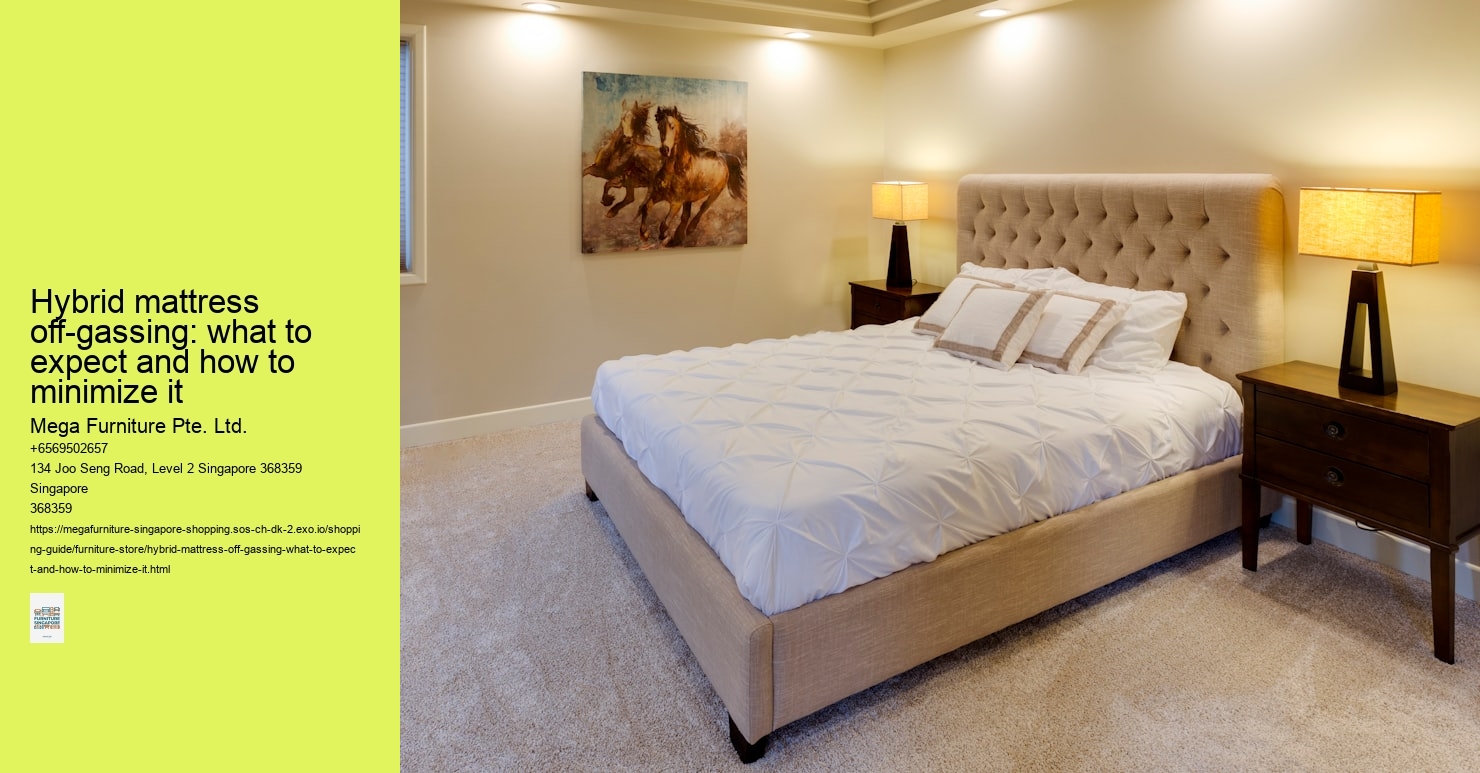
You smell the new mattress before you touch the sheets. It sits there in the corner of the 45 sqm master bedroom where humidity traps everything. Eunos and Tampines neighbourhoods know this well because seasonal moisture stays high all year round, making the air feel heavy and trapping the smell in the corners of the room. Most parents worry about the air quality for the kids sleeping in their favourite spot. The smell isn't just foam; it's the humidity working against you. You feel it in your nose. It really stings the eyes.
Ventilation is always key. HDB layouts often lack airflow so you need to open the window. SG humidity often around 80%+, trapping volatile organic compounds longer than in drier climates where the air moves freely and clears the scent quickly from the mattress surface. Small room, cannot keep smell. That is exactly why you want to check the foam density before you commit to buying. A 45 sqm room fills up fast. You got storage space or not leh? Storage blocks airflow completely. If you always close the door, the smell stays inside.

Buy a mattress that breathes and don't just buy the soft one. There's no single best mattress — only the best one for how you sleep, in a climate that punishes the wrong choice. The honest filter for the best mattress in Singapore starts with our weather: high humidity and warm nights mean breathability and temperature regulation matter as much as support, so a mattress that feels perfect in a cold country can sleep sticky and hot here. The main constructions each suit a different sleeper — memory foam contours and relieves pressure for side sleepers but can trap heat unless it's cooling-gel or open-cell; pocket spring gives bounce and motion isolation for couples; hybrid combines coils for airflow with foam or latex on top, which is why it's the popular all-rounder for hot, shared beds. Firmness matters too: a medium-firm mattress is the common recommendation locally, supporting the spine without letting you sink in and trap heat. The real test is lying on it for a few minutes in each sleeping position — that feel test beats any spec sheet.. Check the smell first. You want the air to move because the room is small and you have kids who need fresh air to sleep properly without irritation from the chemicals. New foam can off-gas a faint smell for a week or two before it settles down. Flat-pack joints are only as good as the assembly. If the room feels sticky, the smell will linger for days. Buy the one that doesn't trap heat or smell. Monsoon season makes it worse.
Smell lingers in the corner. Compact BTO units lack natural cross-ventilation compared to landed homes with open yards. Unlike those spacious properties, blocks near Tanjong Katong trap the initial VOC release from new foam layers for days longer. High density means air just sits there without moving, especially when the windows face the corridor or the common wall. You cannot rely on wind alone to clear the chemical odour.
Place headboard flush against the plasterboard. Airflow dies instantly. This blocks the gap where fresh air usually enters from the window during the year-end monsoon. Humidity gets stuck in the mattress materials — slowing down the off-gassing process significantly. Corner bedroom scenarios make it worse because the bed often blocks the only passage for circulation. You push furniture in already, then air gets trapped behind the unit. The dampness from a 3-room unit near Bedok MRT does not help the smell vanish faster. If you want the smell to go, you need movement. A tight fit keeps the smell alive.
Leave the gap. You need at least 30cm behind the headboard for proper exchange. Unless you got a master bedroom that feels like a warehouse, which is rare in a 3-room BTO, you cannot afford to block that space. Ventilation strategy matters more than just the mattress brand in tight spaces. You must prioritise the layout over the brand. But if you live in a landed home, you can relax leh. There is no need to worry about the smell staying long in that environment.
Most buyers settle for online reviews without seeing the real thing. You better go down to Joo Seng or Tampines to feel the Somnuz® weave yourself. Online photos lie about texture and stiffness sometimes. A physical touch confirms if the material suits your skin sensitivity. This step prevents regret after the heavy delivery truck arrives.
The weave density determines how the fabric ages over years. Loose weaves trap dust easily in humid Singapore conditions. Light colour shows dirt easily in such damp weather. Tighter weaves resist staining from daily wear and tear. Megafurniture uses specific blends that hold up better against moisture.
Lying on the bed gives the truest sense of support. A showroom model might feel different than your bed at home. Push down on the corners to check the foam recovery rate. If it sinks too deep, back pain could follow later. No rush the decision just because the display looks nice.
New foam often carries a chemical smell when first opened. This off-gassing can linger for weeks inside your bedroom. Smell the mattress directly in the showroom before buying. If the scent is too strong, ventilation might struggle later. Wait until the smell fade before sleeping on it.
Testing now saves headaches during the delivery week. Once the mattress leaves the store, returns become difficult. Confirm the firmness matches your preference before signing the paper. Return policies are strict once the mattress leaves the floor. Better to test thoroughly while the staff are still there lor.
Hybrid mattress price vs. value: justifying the investment in Singapore
Smell lingers in the air for weeks. That chemical tang stays longer in a humid 4-room BTO master bedroom than you expect. Budget lines under $1,200 often skip low-VOC certification entirely. You get a mattress, sure, but the air inside the room stays heavy until the monsoon breaks. Spending closer to $2,400 locks in better foam density and fewer volatile compounds. It is a difference you notice immediately when the kids wake up in the morning, especially if the room is small and ventilation is poor and stale.
Generic budget foam reacts badly to Singapore humidity. It traps heat and releases more odour when the humidity hits 80%. Families with toddlers need that extra safety margin, especially when air circulation is poor near the window. A certified low-VOC hybrid mattress handles the dampness without turning into a chemical sponge, keeping the air fresh for the whole family and their guests. It stays steady through the year-end monsoon season. You won't smell it on the first night. Air quality matters more than brand name on box.
Only save money if the bed sits in a guest room nobody sleeps in regularly, as the risk is not worth the small savings and time. Kids sleeping on budget foam is a risk nobody wants to take. The smell might fade eventually, but the off-gassing period lasts weeks longer than you'd like to wait for a new baby sleeping there safely now. Worth the cost lah. Don't skimp on the bedroom where you rest your head. Queen size fits HDB bedrooms.
Open the box on a rainy Tuesday and the foam feels different. You expect the smell to vanish in just three days. It lingers much longer than the manufacturer says because monsoon windows drag the curing process out significantly during the first year of residency. New residents often mistake this for poor quality, yet it is actually just the air trapped in the foam. The first year of residency changes everything.
Aljunied nearby areas are notorious for dampness, and the humidity stays high even inside the flat during the monsoon. Foam layers need air to dry properly, but without ventilation, the inner layers stay wet for weeks. A 12 sqm bedroom traps the moisture. But the foam takes longer to harden, which affects the support you get on a daily basis.
Don't panic about the smell, as it is just the weather. But if you can, open windows to let the air move. Exception — If you live on the ground floor, be careful lor. Some foam types absorb water faster, so you need to rotate the mattress. This helps the air circulate, which is crucial during peak rain months. You won't see the results fast. Patience is key.
" width="100%" height="480">Hybrid mattress off-gassing: what to expect and how to minimize itSizing and fit for Singapore homes and flats matter for tight spaces. Queen size measures 152x190cm for most HDB master bedrooms comfortably. Leave around 60cm clearance on the exit side for movement and access. Super Single 107x190cm fits smaller guest rooms comfortably without crowding.
Delivery, assembly, and access limits for lifts determine if the mattress arrives safely. HDB lift door opening is the real limit at ~90cm wide x 209cm tall. Standard HDB door measures ~91.5x213cm but the corridor turn is usually the limiting point. Leave a 2–5cm buffer to ensure the mattress fits through.
Most delivery teams fail at the stairwell, not the mattress. HDB lift interior ~124cm wide, but lift DOOR opening ~90cm wide x 209cm tall is the real limit. Queen 152x190cm fits, King might not. Want a king? Cannot in a 3-room BTO. Got delivery date or not? Check the contract. The flexible mattress can bend into a lift a rigid frame can't. Measure the corridor turn first. Staircase carrying incurs a surcharge. Families often forget the lift door width when booking online. Resale blocks tighter lah.
Humidity affects everything. SG humidity often around 80%+. Off-gassing takes longer in damp air. New foam smells faint for a week or two. Kids sleep better without chemical traces. Ventilation helps more than waiting. West-facing flats get strong afternoon sun that fades fabric. Toddlers and pets need clean air, so airing out the bed is non-negotiable. Year-end monsoon delays shipping.
Does humidity extend off-gassing period for hybrid beds? It usually slows the process. Ventilation helps more than waiting.
Is Somnuz® certified for SG air standard compliance? Check the specific batch number. Valid certification documents exist.
Plan the move around monsoon season. Don't wait until the last minute. Cheap fabric pills. Ensure the delivery slot allows for proper airing. 12 sqm HDB common bedroom is tight. Leave ~60cm clearance on the exit side.
Most buyers stare at the floor plan until the deposit slips out. Ventilation gets ignored until the mattress smells. You pay for the unit, not the air. But a hybrid mattress needs circulation to off-gas properly. A closed room traps the chemical smell for weeks. Check the airflow before you sign.
HDB low floors trap humidity near the foundation. Ground level air moves slower than upper levels. Condo high floors catch the breeze but lack cross-flow sometimes. You need to measure window opening width. 30cm clearance matters for proper exchange. Don't wait for the renovation to find a blockage.
Check fan placement carefully. A ceiling fan won't fix stagnant corners. Air circulation paths matter for off-gassing. Hybrid foams need fresh air to clear chemicals. SG humidity often around 80%+. Untreated materials grow mould in sustained humidity without wiping and ventilation. Conditioning helps. Solid wood can move with humidity — normal, not always a defect.
West-facing flats get strong afternoon sun that fades fabric and dries leather. Humidity and poor ventilation hit natural leather and solid timber hardest. Leave ~60cm clearance on the exit side, ~30cm other sides. A flexible mattress can bend into a lift a rigid frame can't. Don't buy a unit that feels like a box.
Buyers often assume the smell disappears after a week. It does not. Humidity traps the scent inside the foam layers. You will see mould growing on the mattress fabric during the monsoon season. That is when the smell returns stronger than before. A 152 by 190cm Queen mattress sits in the master bedroom. It breathes poorly if the room stays damp. When the humidity hits eighty percent, the foam absorbs moisture faster than you can clean it, so you need to act before the mould sets in permanently inside the mattress layers.
Washing removable covers stops mould from hiding the odour. You cannot ignore the tags on the fabric. Hot water shrinks the material and creates pockets where dust settles permanently inside the foam. Cold wash works best. A 12 sqm HDB common bedroom holds too much moisture without ventilation. You must keep the air moving. If you skip this step, the smell gets worse. You need to check the fabric label every few months, because the instructions change depending on the fabric type you bought.
Use silica gel packs in humid HDB bedrooms. They protect against chemical residue absorption, because the bedroom is a closed box and you need airflow. Without it, chemicals stick to the fabric, so that is how you keep the mattress steady, leh. Place them under the bed frame where the moisture collects, but do not leave them on the floor where they might get lost or damaged by children playing around the bedroom.