Space tight in here, no room. A Queen mattress measuring 152 by 190cm should fit tight in a 4-room BTO master bedroom. Most buyers feel the top comfort layer and stop there, ignoring the core structure holding the spine until the pain becomes too obvious to ignore, and by then the damage is done. You need the frame to not eat into the 60cm clearance needed for movement around the bed.
Humidity, that one really kills memory foam—especially if it traps heat. 80% plus humidity at night makes the material sink too deep without bouncing back. You want a zone system that keeps the hips from sinking while the shoulders breathe, ensuring your weight is distributed evenly across the surface so the spine stays neutral. Got support layers or not? That is the question you must ask before signing the contract. Low-density foam will soften until you sink in, leaving your spine bent and your back complaining by the time you stand up.

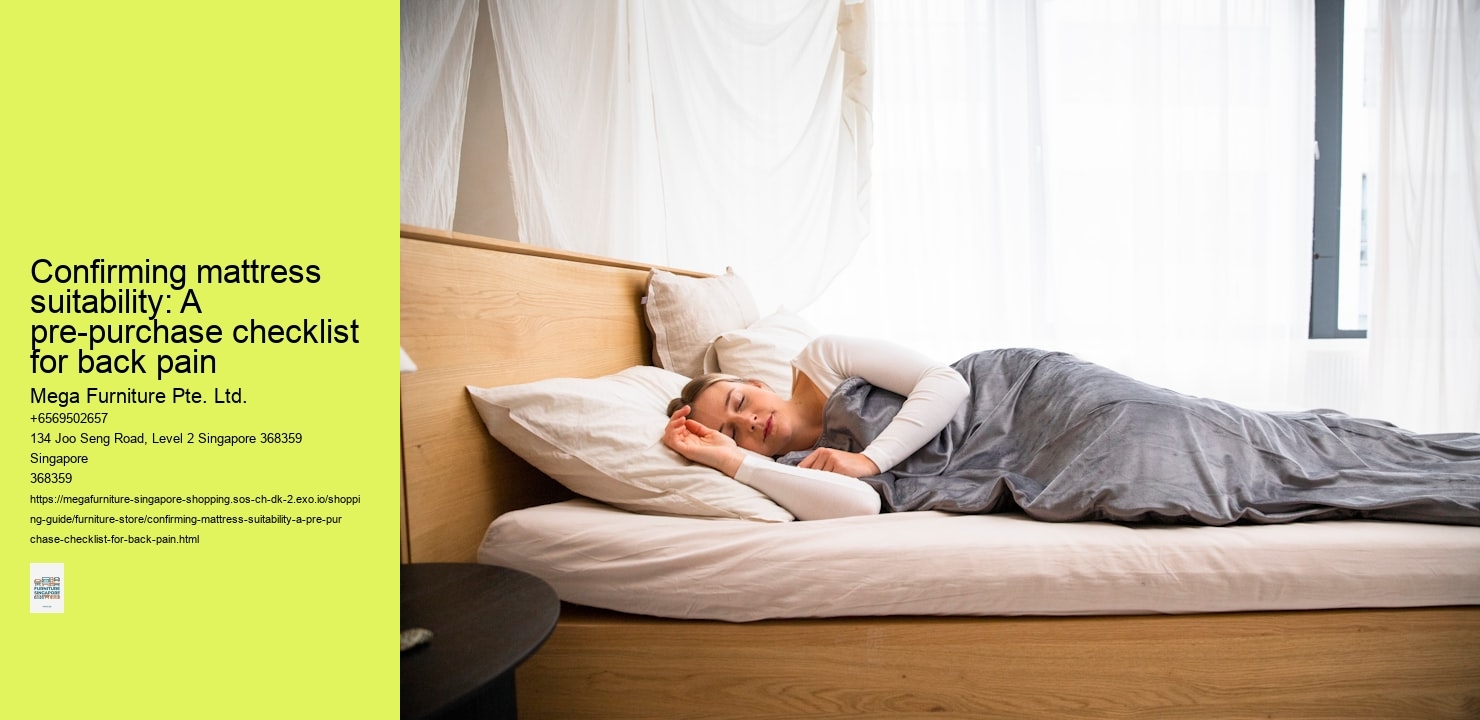
Don’t settle for softness alone. Firm support is non-negotiable for back pain, except when you sleep on your side. Side sleepers need the shoulder contour to be generous, otherwise the neck twists and causes strain during the night. This one must be sturdy enough. If the mattress doesn’t recover after you sit on it, it’s already done, and you won’t find relief in the morning, no matter how soft the top feels. Some models work leh, but the core must be firm enough to support your weight.
There's no single best mattress — only the best one for how you sleep, in a climate that punishes the wrong choice. The honest filter for the best mattress in Singapore starts with our weather: high humidity and warm nights mean breathability and temperature regulation matter as much as support, so a mattress that feels perfect in a cold country can sleep sticky and hot here. The main constructions each suit a different sleeper — memory foam contours and relieves pressure for side sleepers but can trap heat unless it's cooling-gel or open-cell; pocket spring gives bounce and motion isolation for couples; hybrid combines coils for airflow with foam or latex on top, which is why it's the popular all-rounder for hot, shared beds. Firmness matters too: a medium-firm mattress is the common recommendation locally, supporting the spine without letting you sink in and trap heat. The real test is lying on it for a few minutes in each sleeping position — that feel test beats any spec sheet..Humidity, that one really kills foam layers inside the mattress core over time. Most master bedrooms around 12 sqm trap moisture because ventilation stays poor in many HDB blocks. Cheap polyfoam absorbs water until it sags like wet paper, losing its bounce completely within the first two years of use for many couples in Singapore. Back pain gets worse because support disappears overnight when you need it most. You won't feel rested.
West-facing afternoon sun dries out the fabric casing but leaves the core damp because the light hits one side harder while the other stays cool and trapped. Poor ventilation means the bed stays wet already throughout the monsoon season. You buy a mattress for ten years, not ten months of use. Cheap materials swell or crumble when humidity hits eighty percent consistently. The foam softens before you know it.
Invest in high-density foam or natural latex instead to ensure longevity over a decade of sleep for your family. Only single sleepers can risk lower density layers without hurting their back significantly during the first few months. Otherwise, your back pays the price every single morning when you wake up feeling heavy. Brand names don't matter more than material quality and density of the foam used inside the bed frame. Ventilation matters more than brand names or showroom promises you hear during the sales period at any other location in Singapore where you live, regardless of the store. It'll work lor, trust me.
Side sleepers require specific pressure relief at the shoulder joint. Soft foam often collapses too much under body weight though. This creates a hammock effect that hurts the spine significantly. You want even distribution across the entire body frame. Hip alignment suffers when the surface sinks unevenly. This is critical for side sleepers.
Small HDB rooms limit movement options for the sleeper. You cannot roll around on a giant bed easily. Tight corners mean you need precise support everywhere. A mattress too soft makes getting up harder. Space dictates firmness choice. Storage limits the bed size available.
Medium firmness usually works best for most couples. It balances contouring with structural integrity well enough. Too hard feels like sleeping on concrete directly. Too soft loses the lift needed for joints. Find the middle ground before buying. Testing before purchase is always wise.

Eunos and Bedok flats often share similar layouts. Density means less noise and more vibration transfer. Shared walls require stable surfaces to prevent motion. Neighbourhood living adds pressure to sleep quality. Consistency matters more than luxury here. High density impacts vibration perception.
Comfort without support leads to morning pain quickly. The spine must stay neutral during rest periods. Ignore the plush top layer for a moment. Look at the core layers underneath first. Balance is the only metric that counts. Long term health depends on this.
Most buyers lie down too fast and roll on their side once before standing up. That one is not enough for back pain. You need to spend time on the display unit. Joo Seng or Tampines has the Somnuz® range. Do not rush the decision. Your spine waits for no one. This is not a quick stop on your way home from work, you need to commit to the test and lie there for a full minute to feel the support. Press down hard on the surface. Fabric weave matters more than colour sometimes, especially if you sweat at night. Somnuz® feels different from online pictures, so you must judge the firmness by touch. Check support near the waist, not just shoulders, because that is where the pressure builds first. If it sags, walk away. Your back does not forgive cheap springs, and it will remember the mistake for years. This is not about comfort, it is about alignment, which is critical for back pain sufferers. You feel the difference when you press with your palm. Test the edge support too by sitting on the edge. Does it bottom out? Your hip needs that support because a weak edge will compromise your sleep quality over time. Check the collection page before you go. Megafurniture.sg/collections/mattress lists the firmness levels, so you know what to expect before you arrive. Cannot buy blind. A mattress needs to last ten years, so you invest in quality now rather than replace it later. You save money when you pick right, lah. Go to Joo Seng or Tampines. Both showrooms are accessible by MRT. Joo Seng is near the industrial area. Tampines is better for East Coast shoppers who prefer a central location. Bring your own pillow.
Eight hundred dollars buys a mattress, but it won’t cure your back pain. Cheap polyurethane foam collapses under nightly weight within months; that sinking feeling isn’t comfort, it’s failure. Most HDB master bedrooms take a Queen size, roughly 152 by 190cm, so a weak frame sags faster than you expect. The core softens, and you wake up tired.
Lift the corner to check the foam thickness, because if it thin, it will sag. Back pain needs support, not just softness. Inspect the edge support too, and ask if it collapses when you sit there, because that means no support. Many buyers miss this until delivery day already, then they carry the bed into the lift, only to find the frame bends at the sides, which is a waste lor.
Step up to the one thousand five hundred range for layered support. High-density foams sit beneath comfort layers instead of replacing them. You can press down to feel the difference. It resists compression. Humidity in Singapore kills cheap layers fast; treated foams hold their structure longer. That structural integrity matters when you wake up stiff.
Spend the extra budget on longevity instead of decorations. A bed lasts ten years if the core is solid, whereas cheap ones fail in three. Check the warranty terms and read the fine print before you commit. Don’t skimp on the spine.
A 3.5 by 3m master bedroom sounds spacious until you place a king-sized frame and realise the walkways vanish. Most buyers ignore the turning radius required for proper rest. Back pain demands freedom to shift positions during the night without hitting the wall. If the room feels tight, the mattress firmness becomes irrelevant because the structure traps you. You simply cannot roll over without feeling trapped. Nighttime movement is restricted and many people wake up stiff. The bed size matters less than the room. It is a common mistake.
Aljunied condo units often sacrifice width for location benefits, leaving narrow corridors. Floor plan constraints dictate sleep positioning choices for every household. Leave 60cm clearance on the exit side to allow easy access. Thirty centimetres elsewhere is the minimum for turning. Anything less restricts movement and causes discomfort. You end up sleeping in one spot all night long. Older blocks are tighter than newer condos. Measure before buying. Check floor plan.
Prioritise layout before firmness ratings when selecting a new bed. A softer mattress helps if space allows for sinking. Otherwise, a firmer surface prevents sinking into the wall. Check the lift door too before delivery. 90cm wide is the limit for entry. Delivery is hard. Frames are rigid. Mattresses are flexible. You need to measure the path. Want a king bed? Cannot.
Does cooling material actually help back pain? Many shoppers assume the sensation of coolness directly translates to spinal support during recovery. It won't fix your spine alignment, but it stops you from tossing and turning in the humid nights.
Humidity, that one really kills sleep quality if the bedding traps heat. You need breathable layers to manage the moisture in a 4-room BTO master bedroom where the aircon might struggle. The temperature drop helps you fall asleep faster, which is what matters for back pain recovery.
Is latex cheaper than foam? Usually not. People expect natural latex to be the budget option because it comes from trees. The price tag says otherwise for a 152 by 190cm Queen.
You want stability? Foam can be steady for less. Some buyers buy latex, then realise it costs double the foam. Don't assume natural means affordable when comparing the final invoice.
Delivery and testing questions are critical. Will the mattress fit in the lift? HDB lift door opening is often 90cm wide. A rigid frame cannot bend. Flexible mattress can squeeze through where a bed won't. Check the fine print. Want a King bed in a 3-room? Cannot. Queen can, lah. Ensure you measure the corridor turn before ordering because the hoist charges can add up quickly if access is tight for delivery drivers.
Solid-wood or plywood frames outlast particleboard when exposed to daily wear and tear. Rubberwood is a common affordable hardwood used in local furniture frames. Foam density drives how long cushions hold shape over time. Dark or patterned upholstery hides stains and pet hair better than light solid colours.
The HDB lift door opening is the real limit at roughly 90cm wide and 209cm tall. Standard internal doors measure about 91.5x213cm so the lift or corridor turn usually stops delivery. Leave a 2–5cm buffer around your mattress dimensions to avoid getting stuck during assembly. Check your specific flat layout before ordering larger frames.
Delivery day feels like celebration. Sign the paper too fast, you lose leverage forever. The lads will move the mattress into the 4-room BTO bedroom without a second thought given. Sagging hides in the box. It happens when the factory skips a layer of foam. You pay for a King bed, but get a weak core. A 152 by 190cm Queen fits most HDB master bedrooms, so size isn't the issue. The issue is the build quality.
You need to check sagging before the lads carry it into the lift. Run your hand along the seams and check for loose threads. Edges must be firm, otherwise the foam density is low. Humidity in Singapore kills cheap foam faster. You got a 4-room BTO, you need the frame to last. Wait for the unloading and inspect every corner carefully. Lift door is 90cm wide — so you can't turn it sideways once inside. Don't let them push it past the threshold until you're fully satisfied with the inspection.
Tell them to take it back immediately. You won't accept a damaged mattress. Only exception is a small stain, nothing more. This one is strictly about back pain support. A mattress with a dip will hurt your spine. You won't sleep well at all. That is the real cost to your health. A defect found now saves you a headache later on. You already paid enough for the wrong size. Back pain needs proper support, not a broken frame. Refuse the delivery leh.
Most buyers sign the cheque while standing up. They do not lie down long enough. The firmness label on the box does not match the feeling on your spine. You walk out with a new mattress only to regret the choice next morning. Paying the deposit locks you in. You cannot change your mind once you sign.
Firmness means one thing. It means your spine stays straight. Marketing terms like medium or plush are just words that do not tell you the truth about your spine alignment. You need to feel the support. Lie on your side and see if the hip sinks too deep. A 152 by 190cm Queen fits most master bedrooms. Sitting on the edge is not enough because you need to feel the pressure points when you lie down. This firmness stable. It is not about the brand. You buy the wrong size already. You decide leh.
Try the mattress in the showroom and take off the jacket. Roll over ten times to check the support. If the salesperson watches you, ignore them because they want to sell you the most expensive model. Just focus on the pressure points. Some beds feel soft until you sink in. The back pain comes later. You test it for five minutes but you do not sleep on it for a week. That is the gap. A 4-room BTO master bedroom has limited space so you need the clearance. If the bed is too wide, you cannot walk around.